
KIA Niro: Cooling Fan Repair procedures | Cooling Fan Assembly
Kia Niro - First generation - (DE) (2017-2022) - Service and Repair Manual / Engine Mechanical System / Cooling System / Cooling Fan Repair procedures | Cooling Fan Assembly
Cooling Fan Components and components location
Components
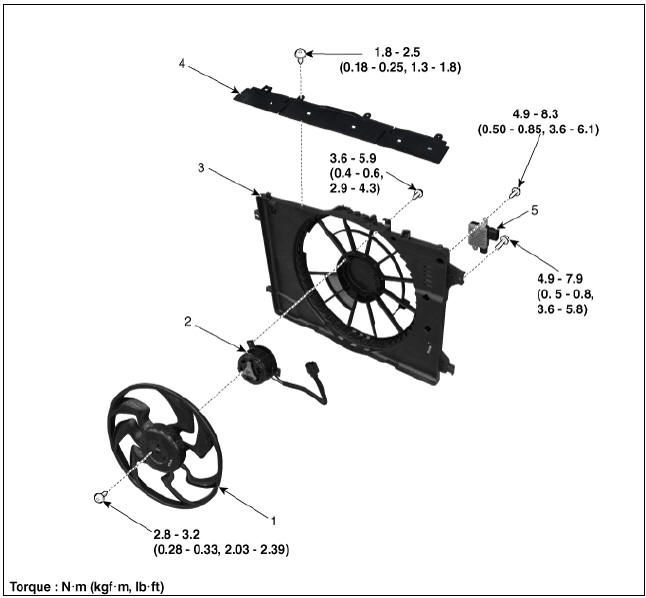
- Cooling fan
- Cooling fan motor
- Cooling fan shroud
- Air dam
- Cooling fan controller (PWM)
Description
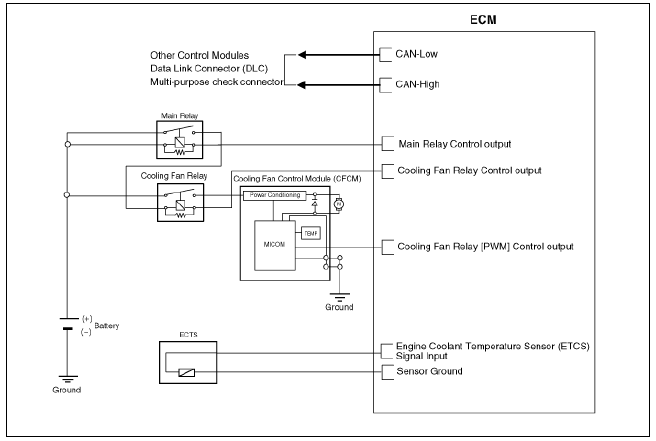
Controls the cooling fan motor voltage depending on the duty output from the ECU (Freq.: 300Hz).
Signal from the ECU to the PWM (SI: 300Hz)
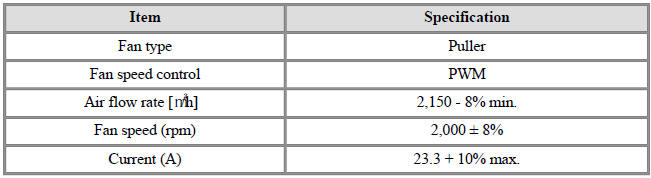
Specifications
Circuit Diagram
PWM Circuit Diagram
Cooling Fan Assembly
Removal and
Installation
- Disconnect the negative battery terminal.
- Remove the air cleaner and air duct A.
(Refer to Intake and Exhaust System - "Air Cleaner")
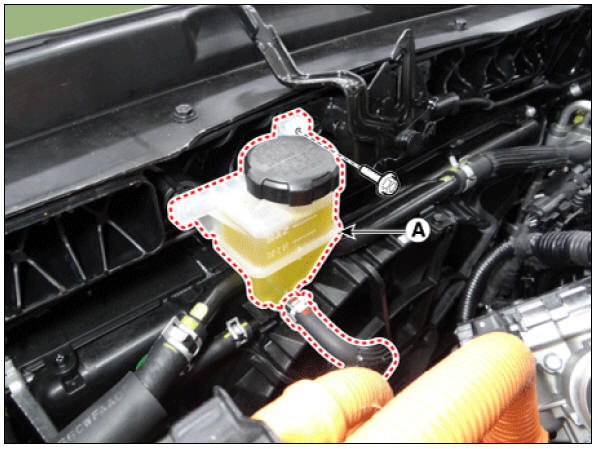
- Separate the engine clutch reservoir tank (A).
Tightening torque : 3.9 - 5.9 N*m (0.4 - 0.6 kgf*m, 2.9 - 4.3 lb*ft)
- Disconnect the cooling fan control module (PWM) connector (A).
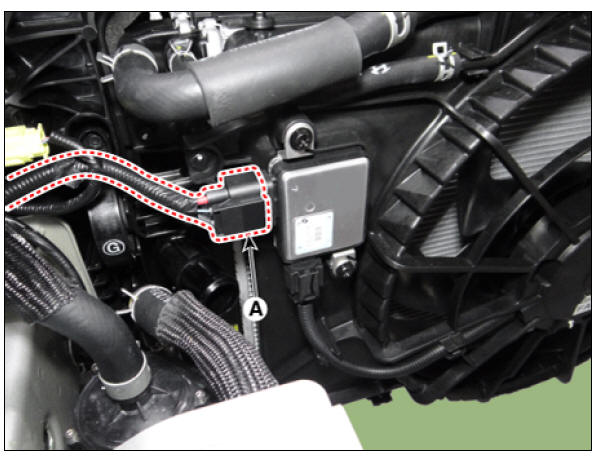
- Remove the hybrid starter generator coolant hose & pipe (A) from the cooling fan shroud.
Tightening torque : 7.8 - 11.8 N*m (0.8 - 1.2 kgf*m, 5.8 - 8.7 lb*ft)
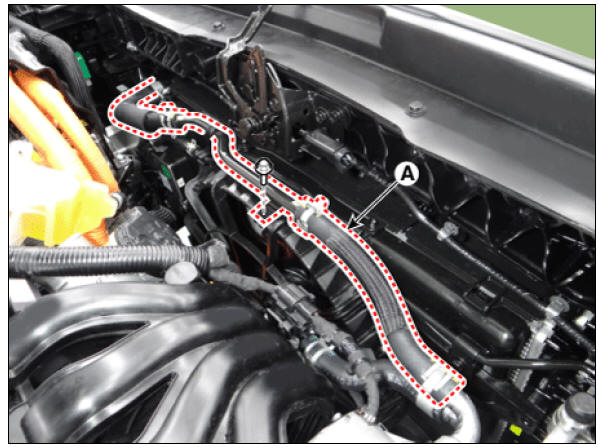
- Separate the radiator coolant pipe (A) from the cooling fan shroud.
Tightening torque : 7.8 - 11.8 N*m (0.8 - 1.2 kgf*m, 5.8 - 8.7 lb*ft)
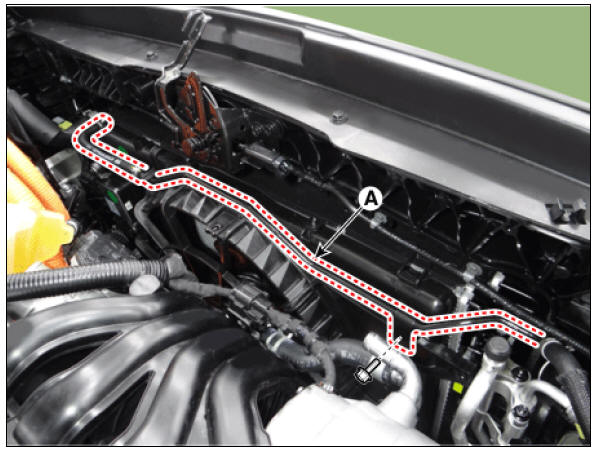
- Remove the air dam (A).
Tightening torque : 1.8 - 2.5 N*m (0.18 - 0.25 kgf*m, 1.3 - 1.8 lb*ft)
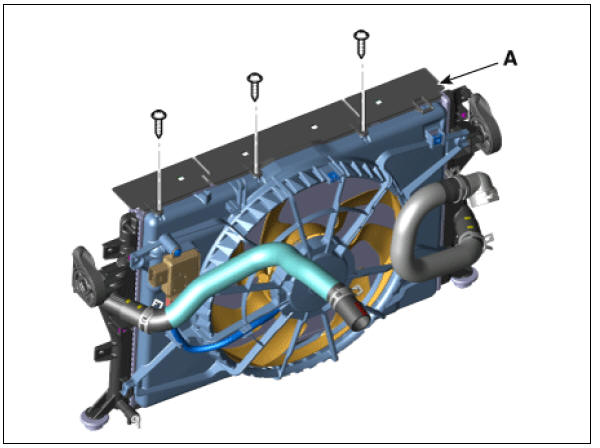
- Remove the cooling fan assembly (A).
Tightening torque : 4.9 - 8.3 N*m (0.5 - 0.8 kgf*m, 3.6 - 6.1 lb*ft)
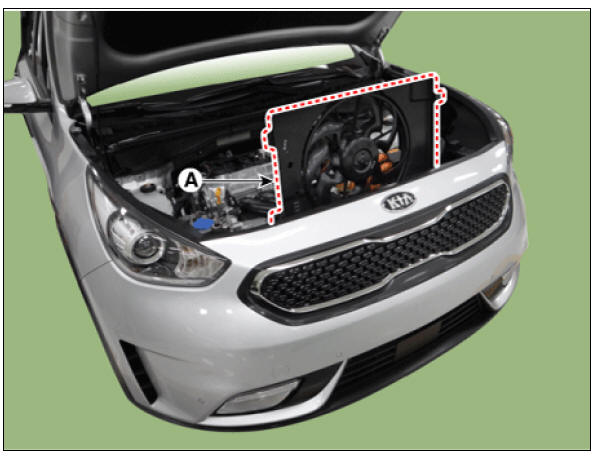
- Install in the reverse order of removal.
READ NEXT:
 Cooling Fan Control Module (PWM) | Radiator
Disconnect the battery negative terminal.
Remove the air duct.
(Refer to Intake and Exhaust System - "Air Cleaner")
Disconnect the cooling fan control module (PWM) connector (A) and cooling fan motor
SEE MORE:
Manual accident reporting
The driver or passenger manually can
make an emergency call in the Public
Safety Answering Point (PSAP), by
pressing SOS button to call the necessary
emergency services.
A call to the emergency services through
the Pan-European e
Scheduled maintenance service (Kia Niro EV)
Normal maintenance schedule - for Europe
I: Inspect and adjust, correct, clean, or replace if necessary.
R: Replace or change.
* 1: When replacing or adding coolant, we recommend that you visit an
authorized Kia
dealer/service partner.
* 2
Categories
- Home
- KIA Niro EV, Hybrid - Second generation - (SG2) (2021-2024) - Owner's manual
- Kia Niro - First generation - (DE) (2017-2022) - Service and Repair Manual
- Contact Us
