
KIA Niro: Start/Stop Button | ESCL (Electronic Steering Column Lock)
Kia Niro - First generation - (DE) (2017-2022) - Service and Repair Manual / Body Electrical System / Button Engine Start System / Start/Stop Button | ESCL (Electronic Steering Column Lock)
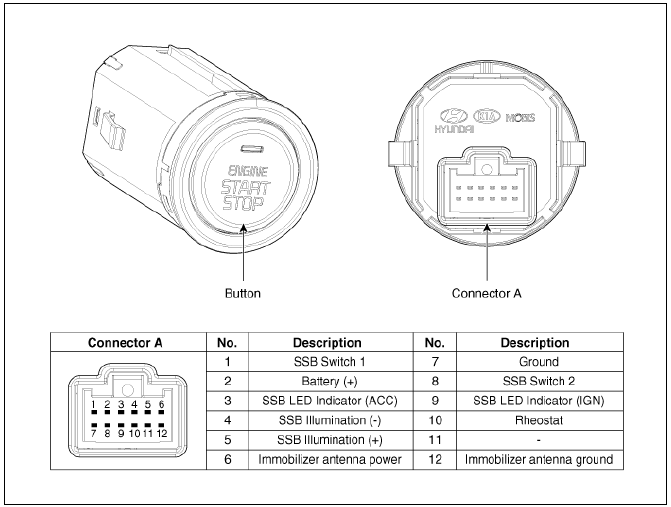
Start/Stop Button Repair procedures
Removal
- Disconnect the negative (-) battery terminal.
- Remove the crash pad garnish assembly (RH). (Refer to Body - "Crash Pad Garnish (RH)")
- Remove the start/stop button.
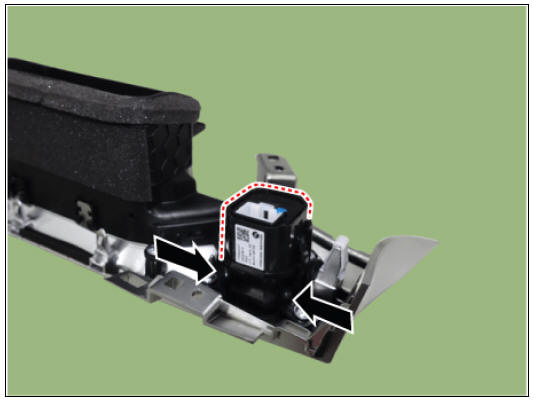
(1) Push the fixed hooks.
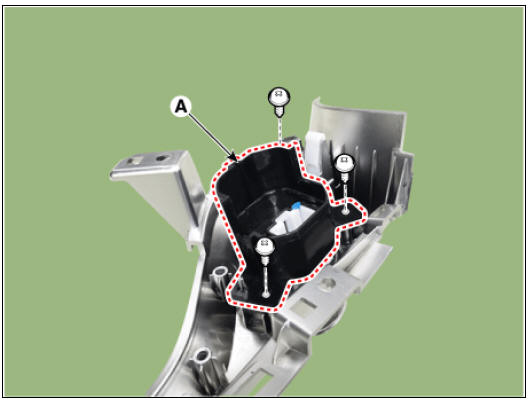
(2) Remove the start/stop button bracket (A) after loosening the mounting screws.
3) Remove the start/stop button (A) by pressing it in the direction of arrow after pushing the fixed hooks.
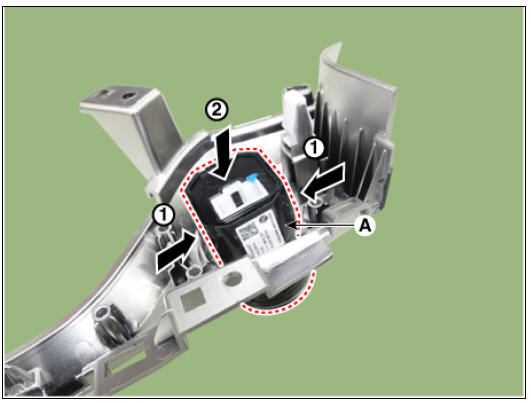
Installation
- Install in the reverse order of removal.
ESCL (Electronic Steering Column Lock)
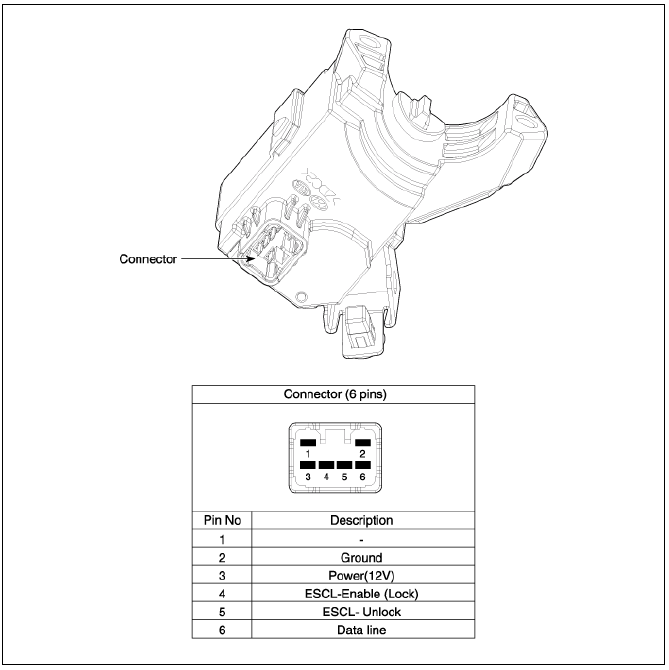
Removal
- Disconnect the negative(-) battery terminal.
- Remove the crash pad lower panel. (Refer to Body - "Crash Pad Lower Panel")
- Remove the steering column upper and lower shrouds. (Refer to Body - "Steering Column Shroud Panel")
- Disconnect the electronic steering column lock connector (A).
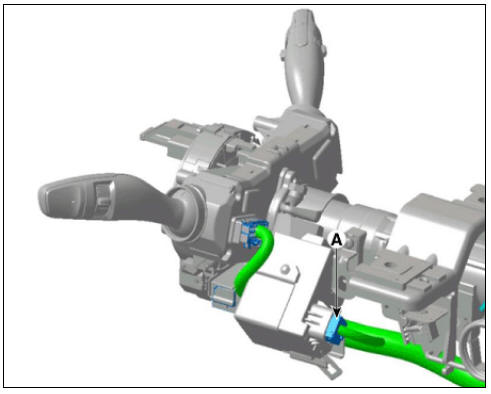
- Remove the electronic steering column lock (A). (Refer to Steering System - "Steering Column and Shaft")
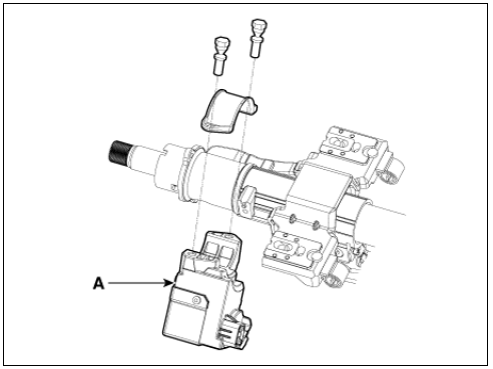
Installation
- Install the electronic steering column lock.
Warning
- Do not reuse the shear bolts.
- When installing the new shear bolts to the electronic steering column lock, tighten the shear bolts until its head is cut off.
Tightening torque : 7.0 - 13.0 N*m (0.7 - 1.3 kgf*m, 5.0 - 9.4 lb*ft)
- Install the steering column.
- Install the crash pad lower panel.
READ NEXT:
 Electro Chromic Inside Rear View Mirror
Schematic Diagrams
Description
The ECM (Electro Chromatic inside rear view Mirror) is one that automatically
dims to protect the
driver's eyes when it senses light reflecting from the car behind. The sensor in
the mirror detects the
brigh
SEE MORE:
Cooling Fan - Components and components location
Components
Cooling Fan #1
BLDC Motor
Main Connector
Cooling Fan #2
BLDC Motor
Main Connector
Removal
Warning
Be sure to read and follow the "General Safety Information and
Caution" before doing any work re
Rear View Monitor settings
Rear View Monitor (RVM) (if
equipped)
Rear View Monitor shows the area
behind the vehicle to assist you when
parking or backing up.
Detecting sensor
Kia NIRO Hybrid
Rear view camera
Kia Niro EV
Wide-rear view camera
Refer to the pic
Categories
- Home
- KIA Niro EV, Hybrid - Second generation - (SG2) (2021-2024) - Owner's manual
- Kia Niro - First generation - (DE) (2017-2022) - Service and Repair Manual
- Contact Us
