
KIA Niro: TPMS Receiver Repair procedures
Kia Niro - First generation - (DE) (2017-2022) - Service and Repair Manual / Suspension System / Tire Pressure Monitoring System / TPMS Receiver Repair procedures
Removal
- Disconnect the battery negative cable.
- Remove the glove box.
(Refer to Body - "Glove Box Housing")
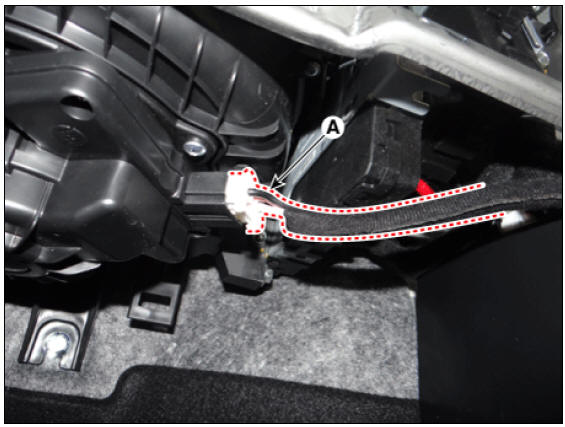
- Disconnect the blower motor connector (A).
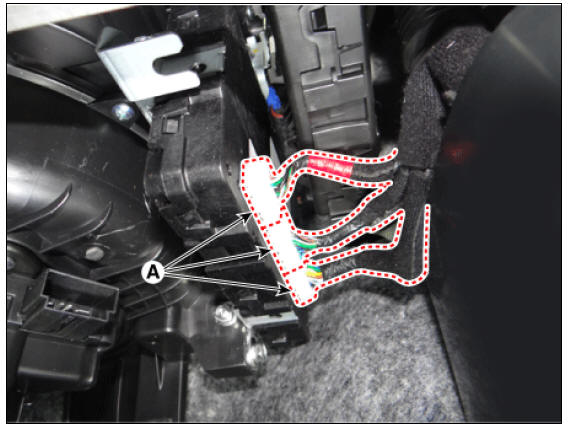
- Disconnect the body control module (BCM) connector (A).
- Loosen the body control module bolt and nut.
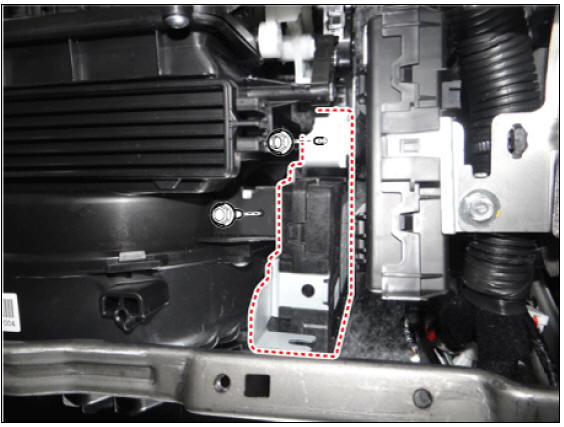
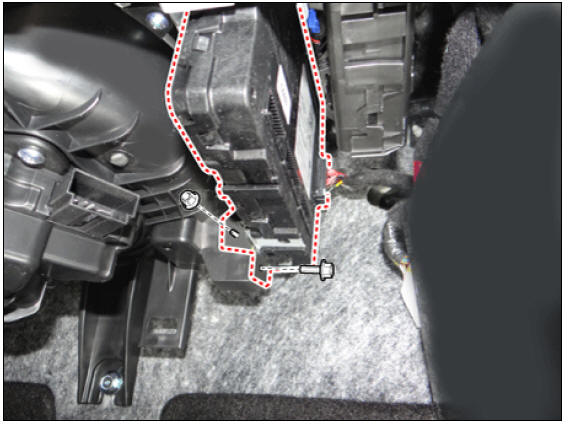
- Disconnect the connector and then remove the body control module.
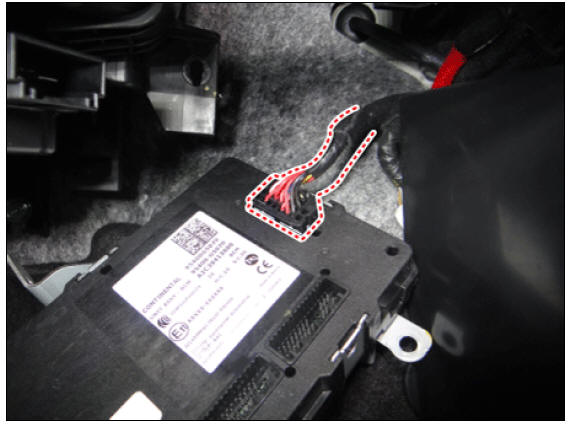
- Install in the reverse order of removal.
Warning
After replacing the receiver, learn by using self-diagnostic device (KDS/GDS).
Diagnosis procedure by using diagnostic device
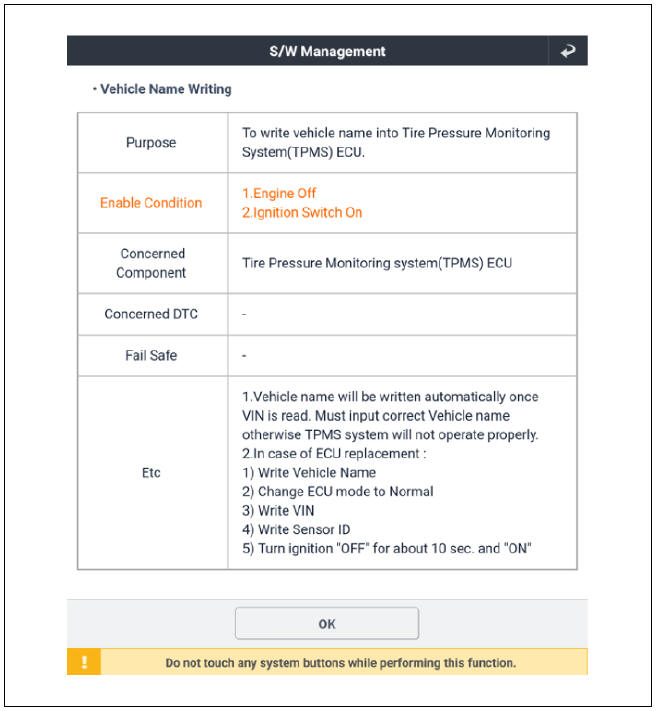
Vehicle Name Writing Method
- Connect self-diagnosis connector (16pins) located under the driver side crash pad to self-diagnosis device, and then turn the self-diagnosis device after key is ON.
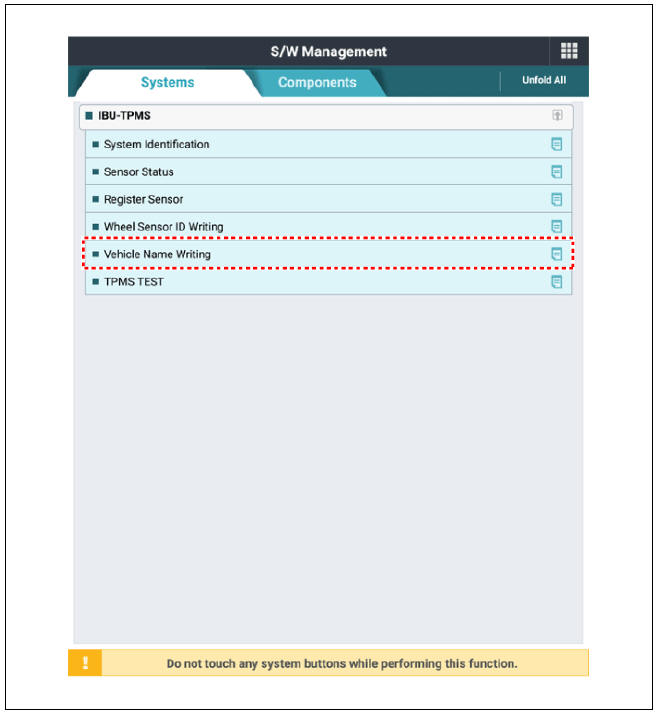
- Select the "vehicle model" and "IBU-TPMS" on KDS vehicle selection screen.
- Select the "Vehicle Name Writing" on KDS screen, then select OK.
- Proceed with the test according to the screen instructions.
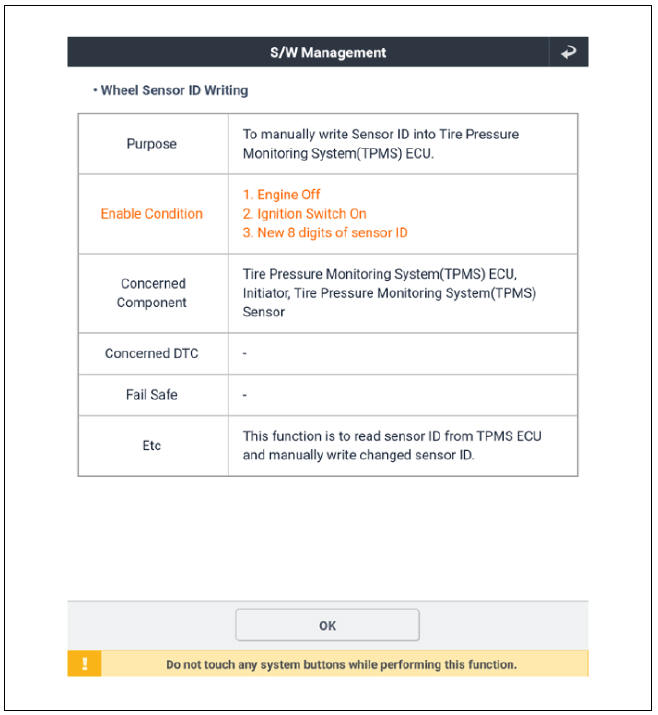
Wheel Sensor ID Writing Method
- Connect self-diagnosis connector (16pins) located under the driver side crash pad to self-diagnosis device, and then turn the self-diagnosis device after key is ON.
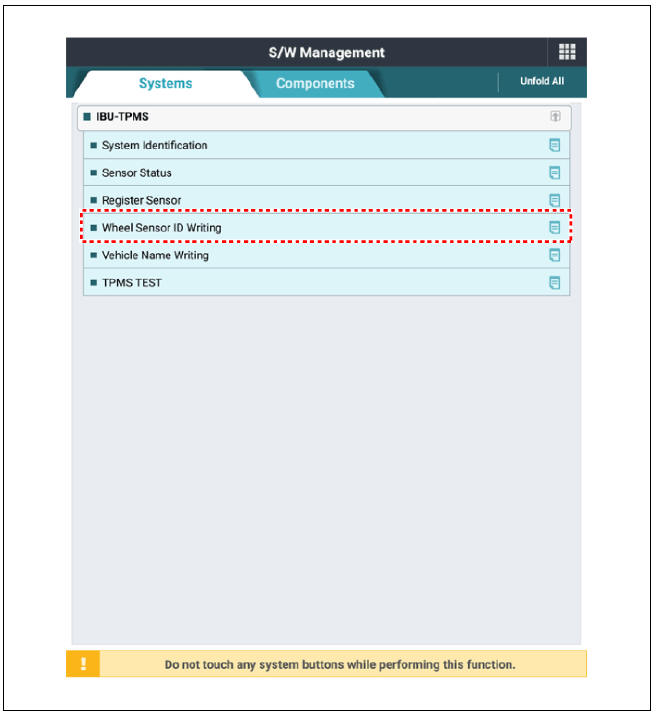
- Select the "vehicle model" and "IBU-TPMS" on KDS vehicle selection screen.
- Select the "Wheel Sensor ID Writing" on KDS screen, then select OK.
- Proceed with the test according to the screen instructions.
READ NEXT:
 Steering System / Repair Procedures
Service Data
Tightening Torques
Service Adjustment procedure
Steering Wheel Play Inspection
Turn the steering wheel so that the front wheels are facing straight
ahead.
Measure the distance that the steering wheel can be turned wit
Electric Power Steering
Description
MDPS (Motor Driven Power Steering) system uses an electric motor to assist
the steering force and it
is an engine operation independent steering system.
MDPS control module controls the motor operation according to information
re
SEE MORE:
Identification Number Locations
Identification Numbers
Identification Number Description
Vehicle Identification Number
World Manufacturer Identifier (WMI)
KNA : Passenger vehicle, MPV(Multipurpose Passenger Vehicle)/SUV(Sports
Utility Vehicle)/RV(Recreational
Door Scuff Trim | Cowl Side Trim
Front pillar trim
Front door scuff trim
Center pillar upper trim
Rear door scuff trim
Cowl side trim
Center pillar lower trim
Rear pillar trim
Door Scuff Trim
Component Location
Front door scuff trim
Categories
- Home
- KIA Niro EV, Hybrid - Second generation - (SG2) (2021-2024) - Owner's manual
- Kia Niro - First generation - (DE) (2017-2022) - Service and Repair Manual
- Contact Us
