
KIA Niro: Overhead Console Lamp Repair procedures | Hazard Lamp Switch
Kia Niro - First generation - (DE) (2017-2022) - Service and Repair Manual / Body Electrical System / Lighting System / Overhead Console Lamp Repair procedures | Hazard Lamp Switch
Inspection
- Remove the overhead console lamp.
(Refer to Lighting System - "Overhead Console Lamp")
- Check for continuity between terminals.
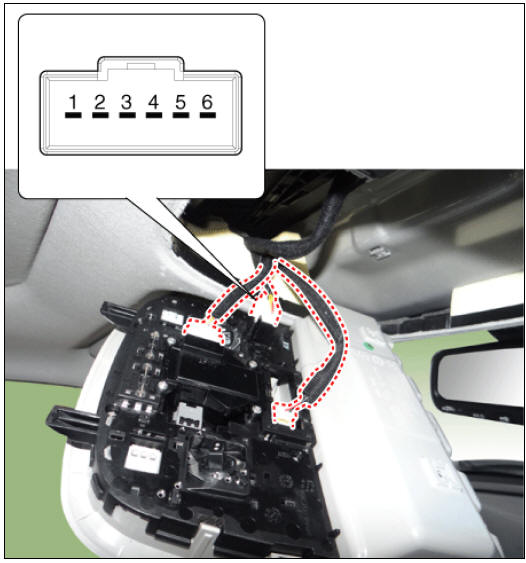
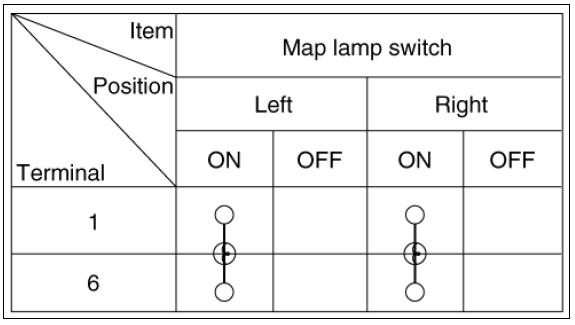
Removal
- Disconnect the negative (-) battery terminal.
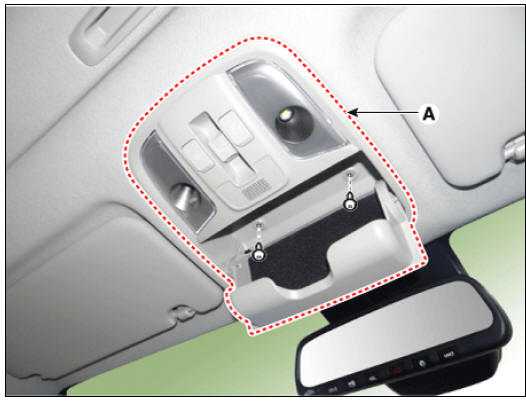
- Remove the overhead console lamp (A) after loosening the mounting screws.
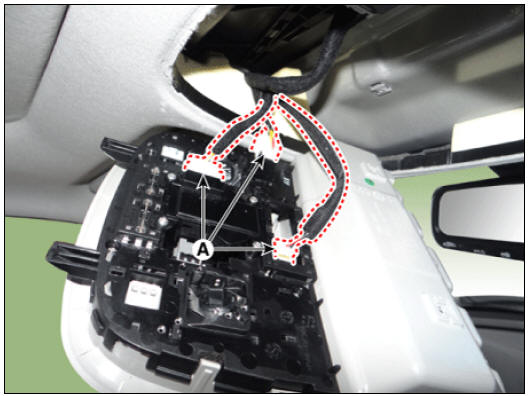
- Remove the overhead console after disconnecting the connectors (A).
Installation
- Install in the reverse order of removal.
Replacement
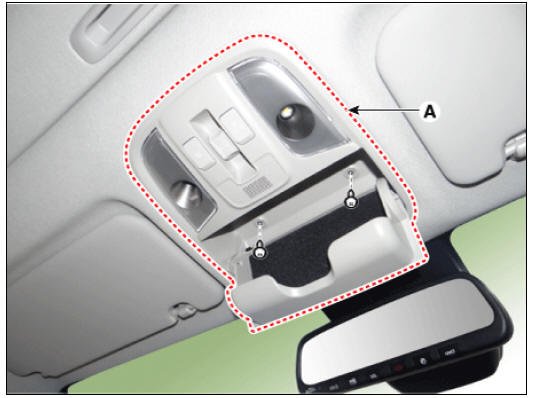
- Remove the overhead console lamp (A) after loosening the mounting screws.
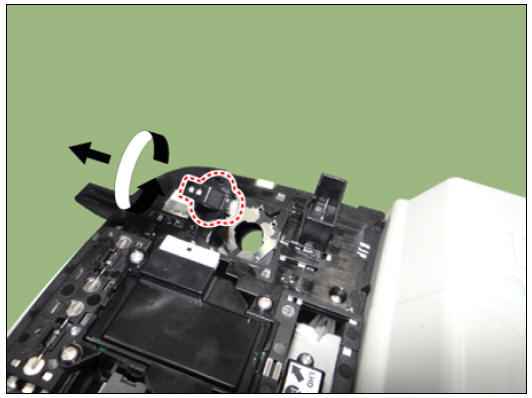
- Remove the socket (A) by rotating in the counterclockwise.
Hazard Lamp Switch
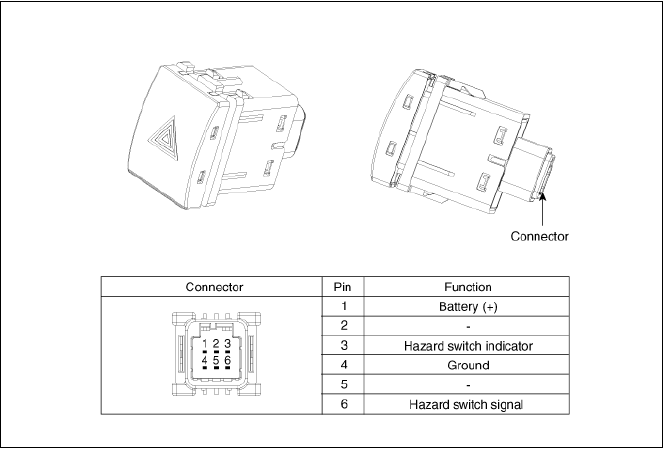
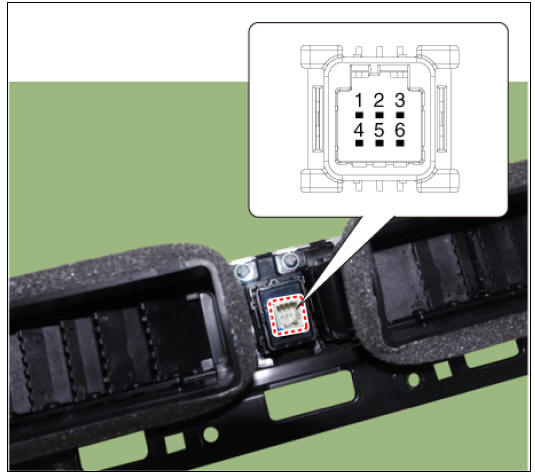
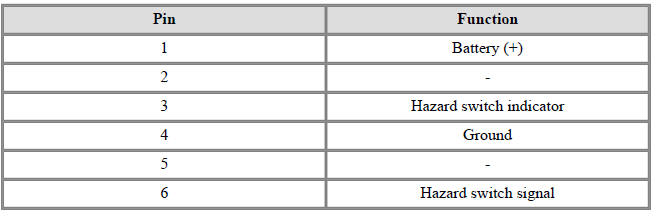
Connector and Terminal Function
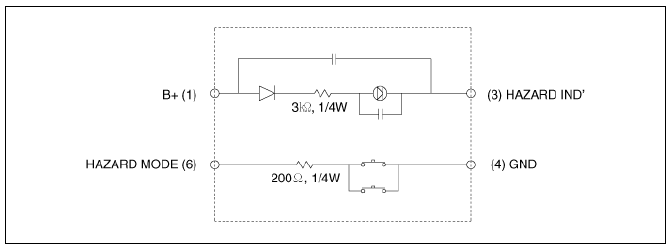
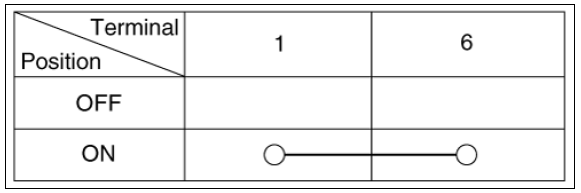
Circuit Diagram
Inspection
- Check for continuity between terminals.
Removal
- Disconnect the negative battery terminal.
- Remove the crash pad garnish assembly (RH).
(Refer to Body - "Crash Pad Garnish (RH)")
- Remove the air ventilation duct (A) by pulling it in the direction of the arrow after loosening the mounting screws.
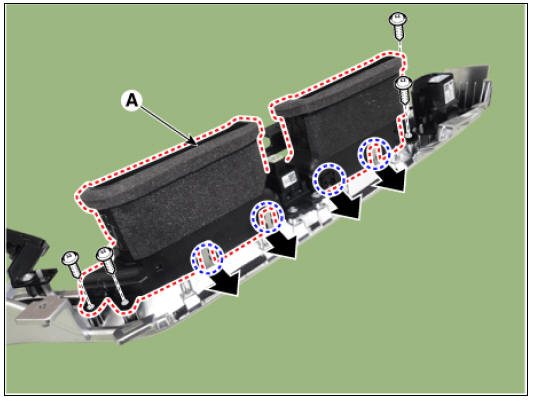
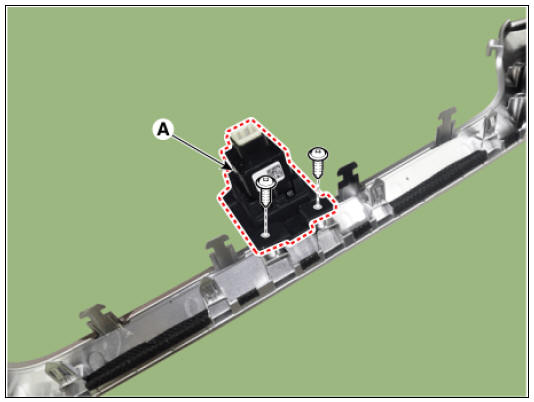
- Remove the hazard switch (A) after loosening the mounting screws.
Installation
- Install in the reverse order of removal.
READ NEXT:
 Rheostat | Front Fog Lamps Repair procedures
Connector and Terminal Function
Rheostat Repair procedures
Removal
Disconnect the negative (-) battery terminal.
Remove the crash pad lower panel.
(Refer to Body - "Crash Pad Lower Panel")
Remove the crash
SEE MORE:
Battery Temperature Sensor
Specification
Air Inlet Temperature Sensor
Battery Temperature Sensor (Side of cell)
Description
Battery Temperature Sensor is installed inside the high voltage battery pack
assembly. It measures the temperature of t
Highway Lane Change Assist (if equipped) (Kia Niro EV only)
Display and control
You can see the status of the Highway Lane Change Assist function operation in the Driving Assist view on the cluster.
Refer to "LCD display".
Highway Lane Change Assist function will be displayed as below depending o
Categories
- Home
- KIA Niro EV, Hybrid - Second generation - (SG2) (2021-2024) - Owner's manual
- Kia Niro - First generation - (DE) (2017-2022) - Service and Repair Manual
- Contact Us
